
8 Best Places for Kayaking in Latvia: A Local Guide to the Country’s Rivers & Lakes
Latvia rarely appears near the top of international lists of kayaking destinations. This is largely because most people who visit the country see Riga first – and occasionally see little beyond it.
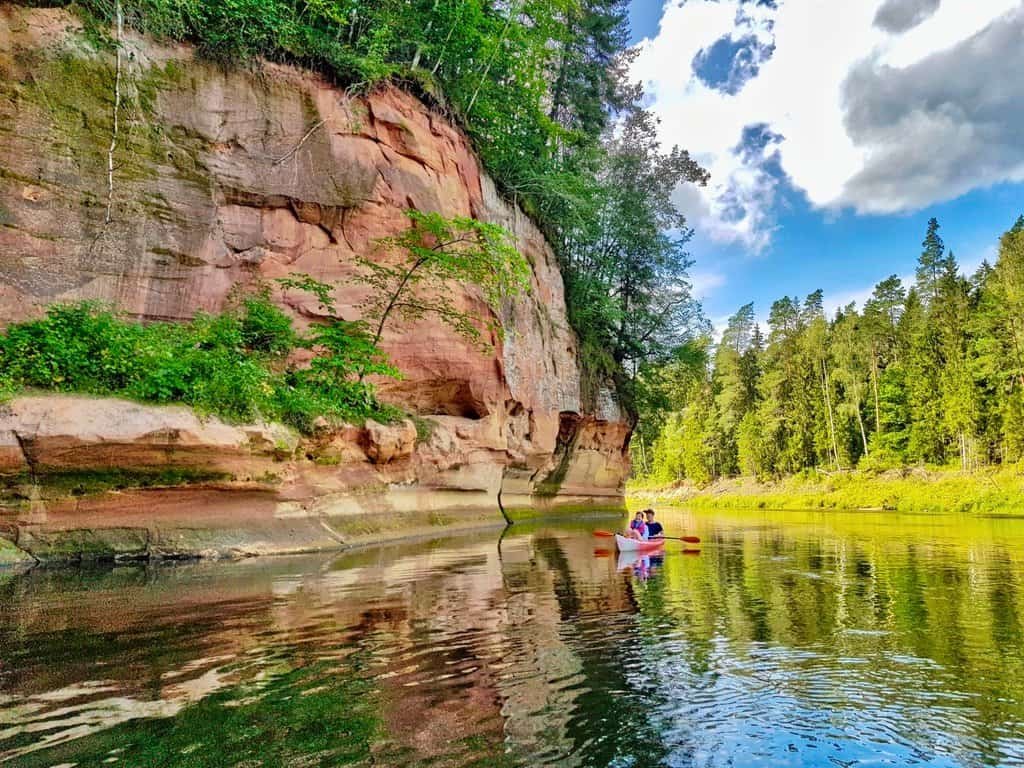
If you’re looking for kayaking in Latvia, you’ll quickly discover that the country offers far more variety than most visitors expect. Latvia has a dense network of rivers, lakes, wetlands and a long Baltic coastline. Some routes pass beneath sandstone cliffs; others cross chains of forest lakes or end on an empty beach beside the open sea.
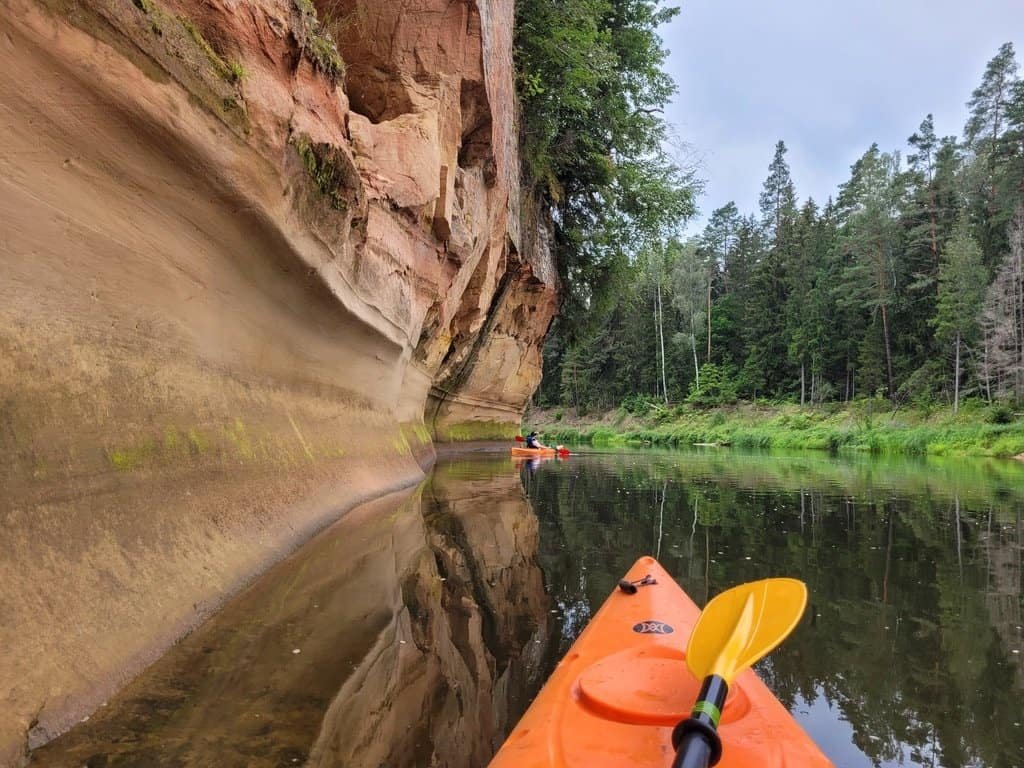
Kayaking in Latvia is not usually about technically difficult whitewater. Most rivers offer accessible paddling through quiet forests, protected landscapes and sparsely populated countryside. The more adventurous exceptions appear during the spring floods, when rivers such as the Amata become fast, cold and suitable for experienced paddlers only.
In this guide, I use kayaking as a general term that also includes canoeing. Most routes are also equally suitable for stand-up paddleboarding. SUP is simply another great way to experience the same rivers and lakes.
The eight destinations below range from relaxed half-day trips to multi-day canoe journeys. They include Latvia’s best-known and wild rivers, several wilder tributaries, and also interconnected lakes in the eastern part of Latvia – Latgale. This is a local guide’s shortlist of the best places to go kayaking, canoeing and also stand-up paddleboarding in Latvia, written after twenty years of putting boats in these rivers.
Table of Contents
- Why Kayaking in Latvia Is Worth the Trip
- Top 8 Places to Go Kayaking in Latvia
- #1: Gauja River: Latvia’s Classic Kayaking Destination
- #2: Brasla River: A Wild Gauja Tributary for Half-Day and Multi-Day Trips
- #3: Amata River: Latvia’s Classic Spring Whitewater Run
- #4: Irbe River: From Forests to the Baltic Sea
- #5: Abava River: Latvia’s Most Diverse Kayaking River
- #6: Salaca River: Latvia’s Classic Two-Day Paddle
- #7: Latgale Lakes: Latvia’s Inland Archipelago
- #8: Daugava River: Latvia’s River of Destiny
- Which Kayaking Destination in Latvia Should You Choose?
- When Is the Best Time for Kayaking in Latvia?
- Frequently Asked Questions About Kayaking in Latvia
- What is the best river for kayaking in Latvia?
- Which river is best for beginners?
- Do I need previous kayaking experience?
- What are the most important safety tips for kayaking in Latvia?
- What is the difference between kayaking and canoeing in Latvia?
- Can I explore Latvia’s rivers on a stand-up paddleboard (SUP)?
- When is the best time for kayaking in Latvia?
- Can I rent a kayak or canoe in Latvia?
- Can I go kayaking in Latvia without a guide?
- Are multi-day kayaking trips possible in Latvia?
- Is wild camping allowed along Latvian rivers?
- What should I bring for a kayaking trip in Latvia?
- Where Next?
- Rolands Ratfelders
Why Kayaking in Latvia Is Worth the Trip
Latvia is one of Europe’s most water-rich countries: roughly 12,000 rivers and more than 2,000 lakes larger than a hectare. A great many of them are perfect for kayaking, canoeing, and stand-up paddleboarding.
Latvia offers a combination that has become increasingly difficult to find elsewhere in Europe: long stretches of navigable water, relatively few people and enough undeveloped riverbank to make the landscape feel genuinely continuous.
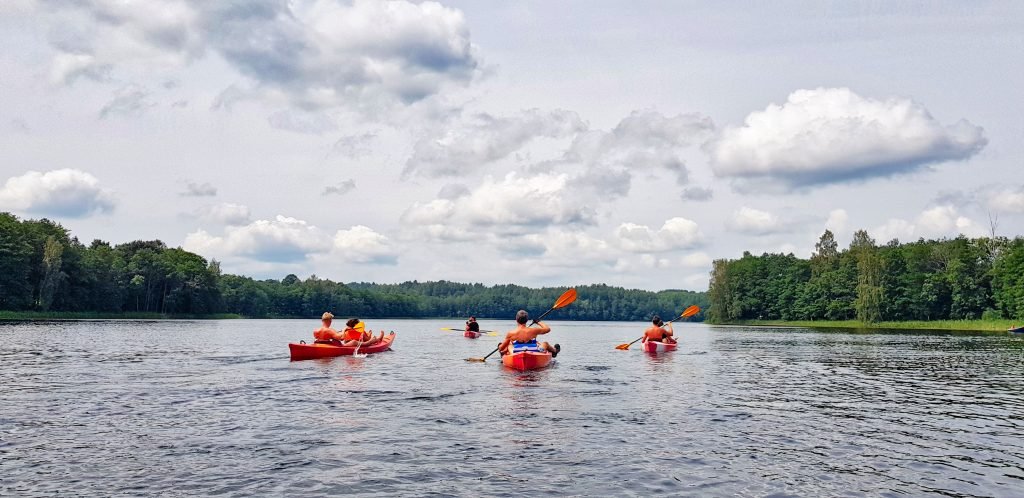
Even our idea of “crowded” is somewhat regional. On a Latvian river, three other boats may already qualify as traffic.
Most kayaking routes are not isolated from civilisation in the expedition sense. Villages, roads and small towns are usually somewhere nearby. Yet the riverbanks often remain forested, and many routes pass through national parks, nature parks or other protected landscapes.
The most interesting kayaking trips in Latvia also reveal more than scenery. Rivers cut through ancient sandstone, connect old trading towns, cross floodplains and provide migration routes for fish and birds. A canoe is slow enough to notice these details but fast enough to reach the next campsite before dinner – assuming the wind has read the itinerary.
Top 8 Places to Go Kayaking in Latvia
Latvia is home to thousands of rivers and lakes, but not all of them offer an equally memorable paddling experience. The destinations below have been chosen for their outstanding scenery, diverse landscapes and the quality of the routes they offer rather than simply their size or popularity. Together they cover everything from relaxed family-friendly canoeing and multi-day wilderness adventures to spring whitewater runs for experienced paddlers.
Most of these destinations are equally suitable for kayaking, canoeing and stand-up paddleboarding (SUP), although some rivers are naturally better suited to certain craft and water levels than others. While late spring, summer and early autumn offer the widest choice of routes, a few rivers become truly exceptional only during the high waters of spring. Here are the eight best places to go kayaking in Latvia.
#1: Gauja River: Latvia’s Classic Kayaking Destination
If you’re visiting Latvia for just one-day kayaking trip, I’d almost always recommend the Gauja. It’s our best-known paddling river, and for good reason. At 452 km, it is Latvia’s longest river, and its most scenic stretches flow through Gauja National Park, the country’s oldest national park. Here, the river winds between towering Devonian sandstone cliffs that were formed around 350–370 million years ago, when this part of Latvia lay beneath a shallow tropical sea.
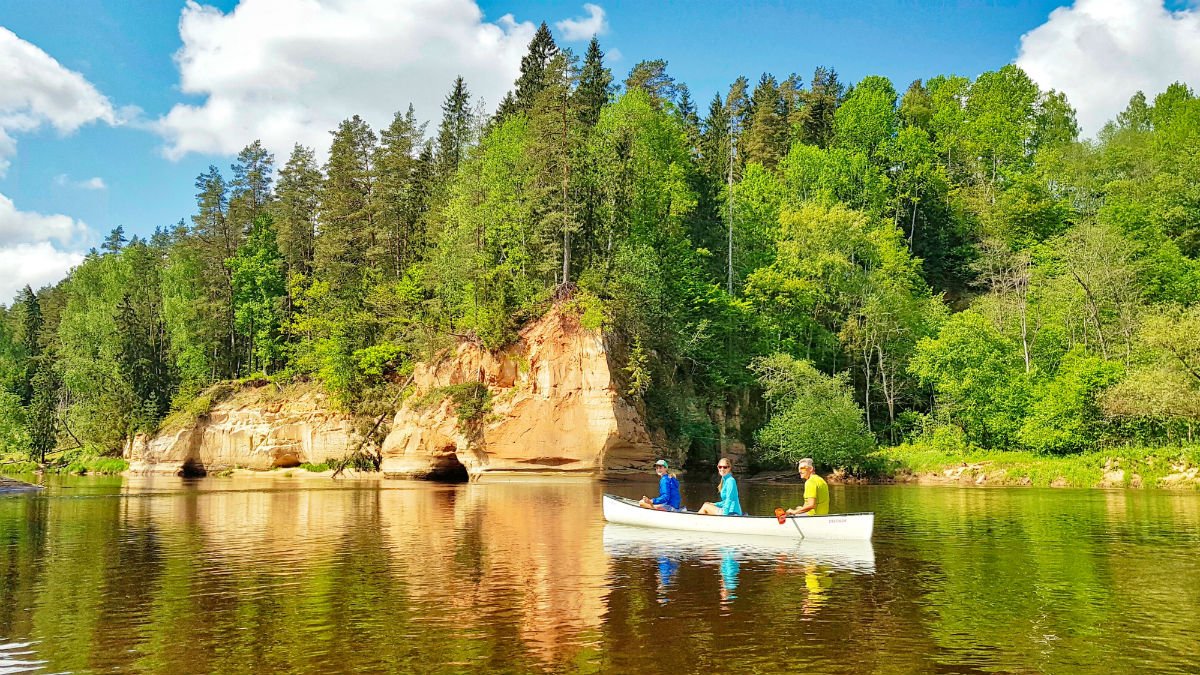
Beyond the scenery, the Gauja also tells an important story of Latvia’s past. Long before roads connected this region, the river served as a transport route for the ancient Livonians, one of Latvia’s indigenous peoples, whose settlements once lined much of the Gauja Valley.
The Gauja offers excellent kayaking almost all the way from Valmiera to the sea, so there are plenty of options depending on how much time you have.
If you’re looking for the classic one-day experience, I recommend the Cēsis–Līgatne section (around 29 km). It takes you through some of the most spectacular part of Gauja National Park. Towering Devonian sandstone cliffs, caves and the famous Ķūķu Rapids and Ķūķu Clifs create some of Latvia’s finest river scenery here.
For a relaxed two-day adventure, continue from Cēsis to Sigulda. This is probably the country’s best multi-day kayaking route, combining dramatic sandstone cliffs, riverside campsites and the historic heart of Gauja National Park.
If you prefer an easier day suitable for families and beginners, the Līgatne–Sigulda section (around 23 km) offers beautiful scenery, a gentler current and views of landmarks such as Turaida Castle as you approach Sigulda.
Yes, the Gauja is also Latvia’s most popular kayaking river, so warm summer weekends can get busy. But “busy” means something rather different here. A Latvian paddler might complain about the crowds, while someone from London would mostly notice the forests and silence. If you can, simply choose a weekday or start early in the morning. The atmosphere changes completely.
Also, don’t stop at the main river. One of my favourite ways to experience the Gauja Valley is to combine Gauja with one of its tributaries, such as the Brasla or Amata, before getting to the Gauja downstream. It feels like discovering two completely different rivers within the same national park.
#2: Brasla River: A Wild Gauja Tributary for Half-Day and Multi-Day Trips
If the Gauja is Latvia’s classic kayaking river, the Brasla is where I often head when I’m looking for a wilder and more intimate experience. As one of the Gauja’s largest tributaries, it flows through the same national park but feels completely different. The river is narrower, more winding and enclosed by forests, yet it also hides impressive Devonian sandstone cliffs, caves and rocky outcrops that many visitors never expect.
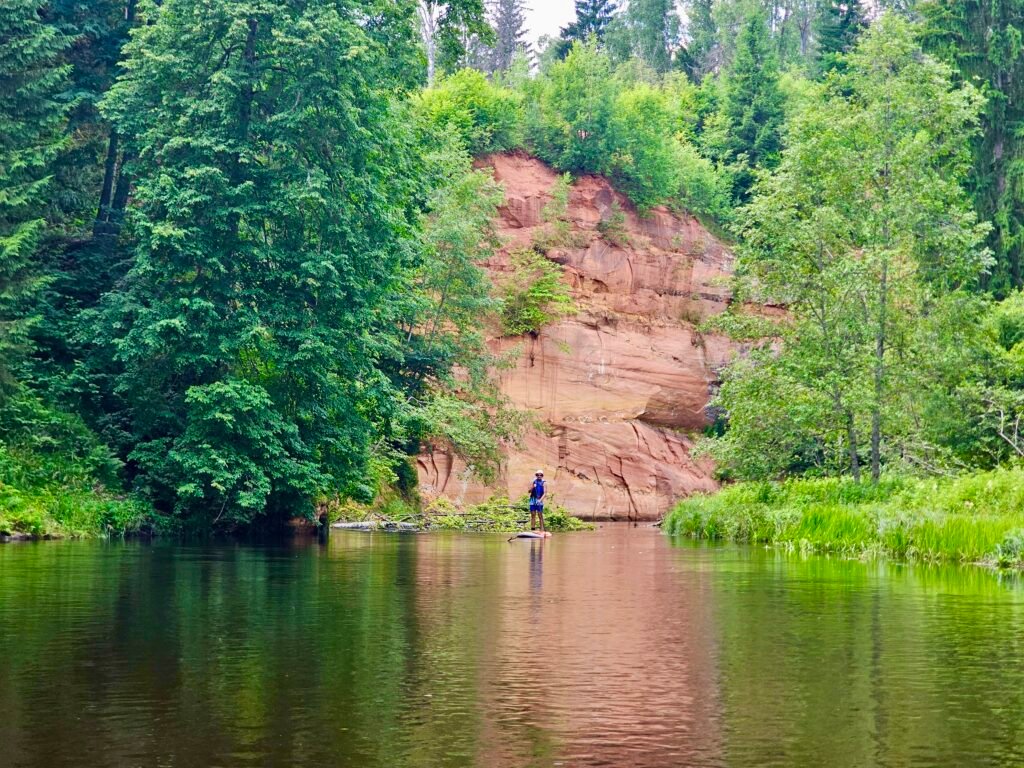
One thing to know before planning a trip: the Brasla changes dramatically with the water level. After prolonged rain or in spring, it becomes a fast-flowing and lively river. During dry summers, some sections can become shallow enough that you’ll occasionally have to step out and pull your kayak over gravel bars. That’s simply part of the Brasla experience rather than a flaw.
The most popular routes start from Plācis or Straupe and continue either to the A3 bridge for a rewarding one-day trip or all the way to the Gauja, which can easily be combined into a two-day adventure ending in Sigulda. Don’t be tempted to finish at the A3 bridge, though. In my opinion, the river becomes even more spectacular below it, where the sandstone cliffs grow taller and the valley becomes noticeably wilder.
#3: Amata River: Latvia’s Classic Spring Whitewater Run
Another well known tributary of the Gauja is Amata River. Yet it is a completely different experience from the Gauja or the Brasla. This is Latvia’s best-known whitewater river and one that local paddlers eagerly wait for every spring flood. For much of the year, it is too shallow for kayaking, but after snowmelt or heavy rain it transforms into one of the country’s most exciting rivers.
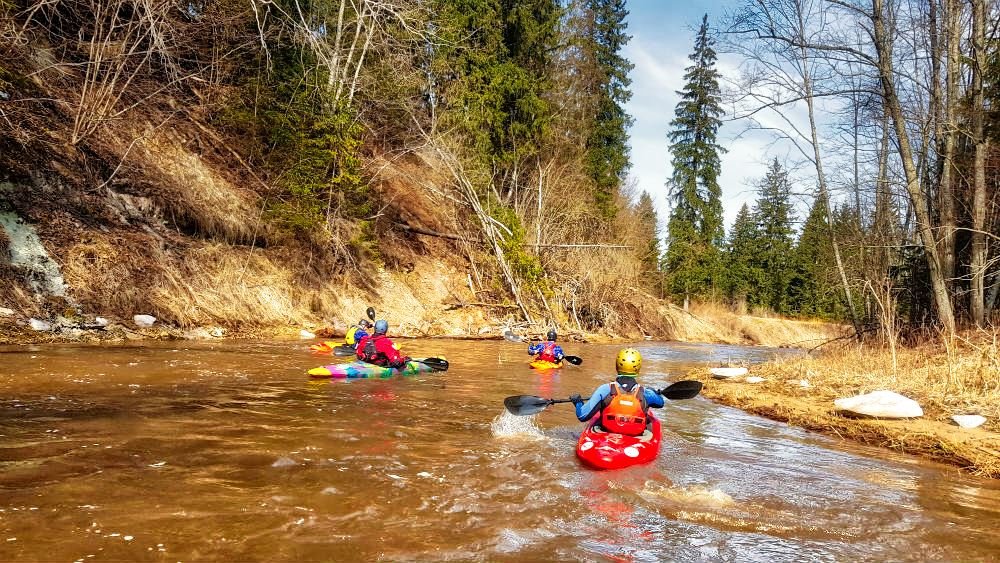
The Amata is fast, narrow and surprisingly technical by Latvian standards. Expect swift currents, small rapids, tight bends, fallen trees and the occasional portage around obstacles, including the Kārļi hydroelectric dam. It isn’t an extreme whitewater river, but it does demand respect. Previous paddling experience is highly recommended, and during the high waters of early spring, it’s essential.
The most popular stretch runs from Melturi to Veclauči, passing the impressive Zvārtes Rock, one of Latvia’s best-known sandstone cliffs. If water levels allow, you can also paddle shorter sections such as Melturi–Kārļi or Zvārtes Rock–Veclauči, while experienced paddlers sometimes continue all the way to Līgatne, where the Amata joins the Gauja.
For me, the Amata is one of those rivers that rewards good timing. Catch it under the right conditions, and you’ll understand why so many Latvian kayakers watch the weather forecast as closely as the calendar every spring.
#4: Irbe River: From Forests to the Baltic Sea
The Irbe is one of my favourite rivers for kayaking in Latvia, and for one simple reason: no other river offers quite the same finish. The journey begins on the quiet Rinda River, one of the Irbe’s tributaries, before continuing through dense forests towards the Baltic Sea.
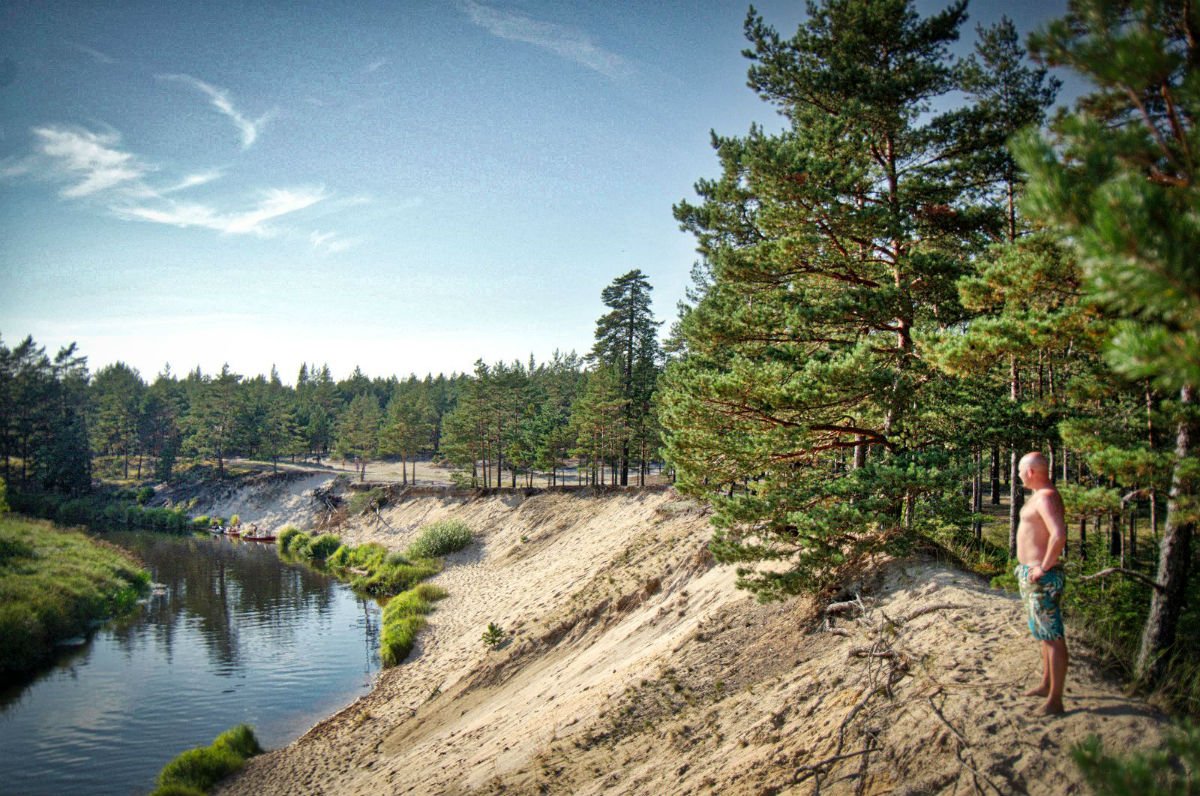
Along the way, the river is lined with impressive inland sand dunes that make perfect places to stop for a swim, a picnic or an overnight camp. Waking up on top of one of these dunes, with the river quietly flowing below, is an experience I never seem to tire of.
The classic route starts in Rinda village and finishes at the Baltic Sea, covering around 38 km. It can be paddled as a rewarding one-day challenge or, even better, as a relaxed two-day trip. If you’re short on time, shorter sections from Rinda to Miķeļtornis (24 km) or Miķeļtornis to the sea (14 km) also work well, but I’d still recommend paddling the whole route if you can.
The ending is what makes this river truly special. Instead of finishing at a bridge or a landing site, you paddle straight onto one of Latvia’s wildest sandy Baltic beaches. Pull your kayak ashore, kick off your shoes and spend a while simply enjoying the sea. After a day or two on the river, it’s a memorable way to finish a journey – and one of the reasons I keep returning to the Irbe.
Although the Irbe lies around 200 km west of Riga, it has become increasingly popular with Latvian paddlers in recent years. Even so, it rarely feels overcrowded, and a weekday trip usually leaves plenty of space to enjoy this remarkable river at your own pace.
I’ve paddled the Irbe in both glorious sunshine and driving rain, and it has never disappointed me.
#5: Abava River: Latvia’s Most Diverse Kayaking River
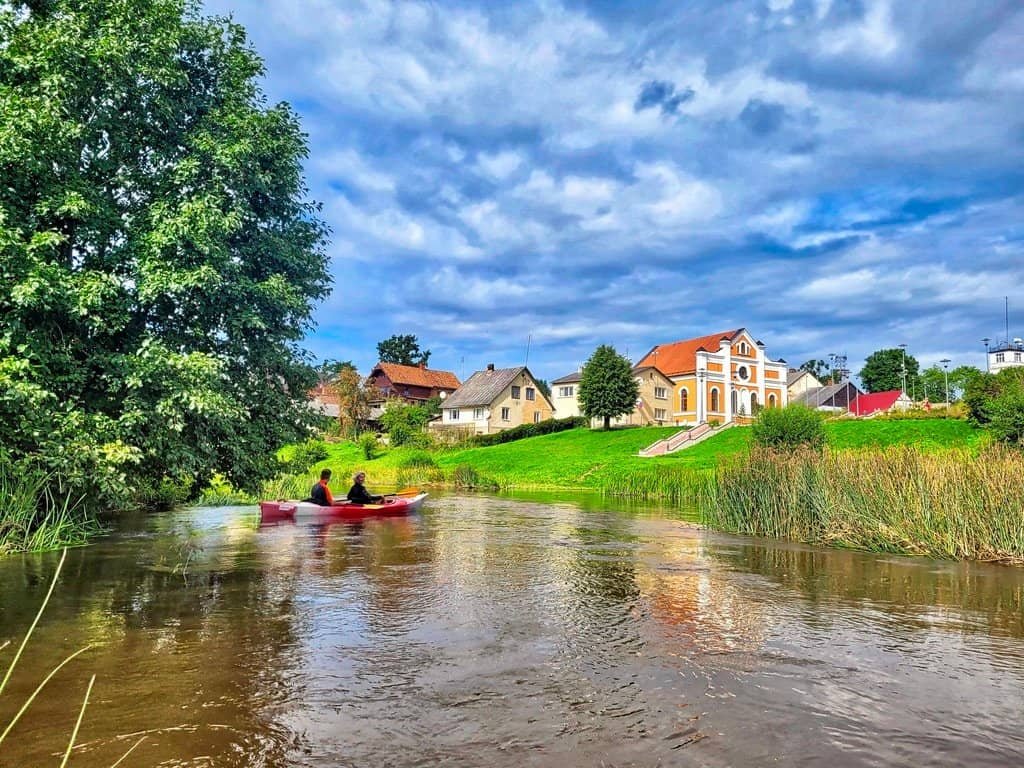
If you enjoy combining kayaking with small discoveries along the way, the Abava is hard to beat. Flowing through one of Latvia’s most beautiful river valleys, it offers a mixture of scenic landscapes, charming small towns and interesting natural landmarks that make it feel quite different from the country’s wilder rivers.
The classic section runs from Kandava to the Abava Rapid (around 29 km), making an excellent one-day trip. Before or after paddling, it’s worth exploring the historic streets of Kandava, while further downstream the cosy town of Sabile makes another pleasant stop.
Nature lovers can also make a short detour to Čužu Mire Nature Reserve, one of Latvia’s oldest protected areas. Besides bubbling sulphur springs, it’s the country’s only natural habitat of the protected shrubby cinquefoil (Dasiphora fruticosa). Along the river itself, Devil’s Cave and Devil’s Stone provide another worthwhile stop with beautiful views across the Abava Valley.
For a completely different experience, continue further downstream. The 43 km section from Renda to the Nabas Lakes, where the Abava joins the Venta, is a peaceful two-day wilderness paddle through forests with very few signs of civilisation. If you have more time, the full 92 km journey from Kandava to the Venta is one of Latvia’s finest multi-day kayaking adventures.
If you prefer a more relaxed day that combines kayaking with sightseeing, a guided Abava River Valley one-day kayaking and sightseeing trip follows a shorter 12 km paddle and leaves plenty of time to explore the historic towns of Kandava and Sabile, along with above metioned Čužu Mire Nature Reserve.
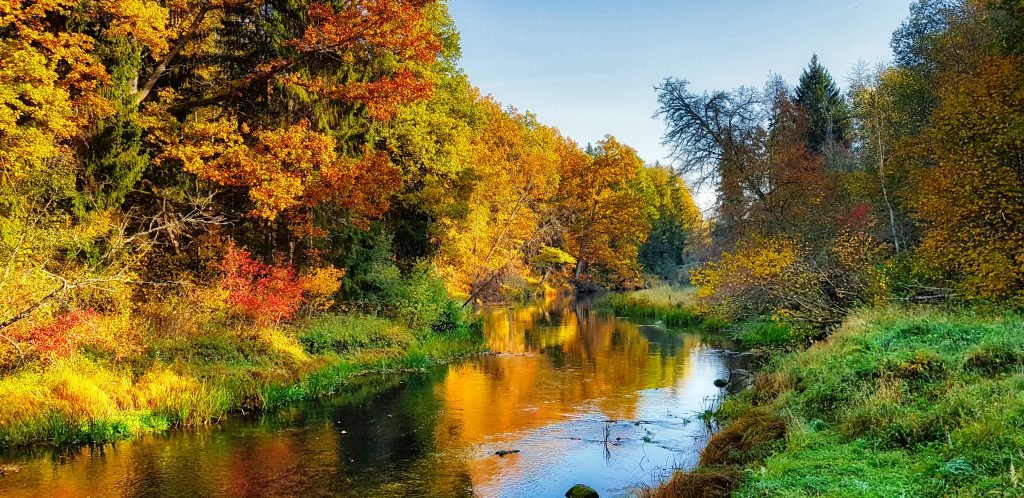
The Abava River Valley is especially beautiful in autumn, when its forests turn brilliant shades of gold and red. If you have the flexibility, plan your paddling trip for early or mid October.
#6: Salaca River: Latvia’s Classic Two-Day Paddle
The Salaca is another of Latvia’s great kayaking rivers. Flowing through the North Vidzeme Biosphere Reserve, it’s the country’s second most popular river for kayaking in Latvia after the Gauja. Yet it is far away from Riga and for most international visitors, it remains an off the beaten path kayaking destination.
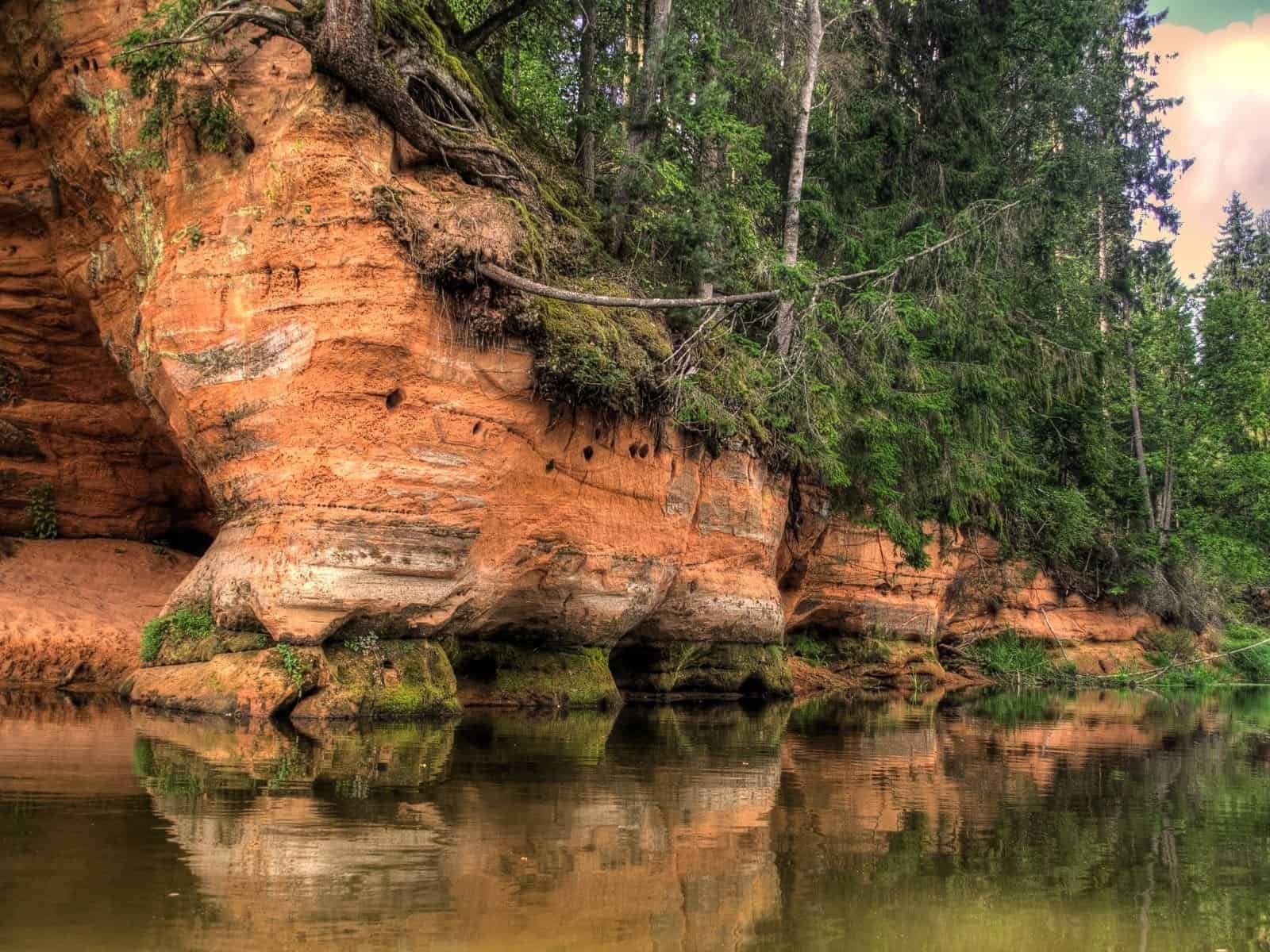
The upper Salaca is famous for its impressive Devonian sandstone cliffs and beautiful forest scenery. If you only have one day, the 15–18 km section from Mazsalaca to Vīķi Bridge is my top recommendation. It takes you through the spectacular Skaņaiskalns Nature Park, where you’ll paddle past some of Latvia’s finest sandstone formations, including Skaņaiskalns, Bezdelīgu Cliffs, Angel’s Cave and Devil’s Cave.
For a longer adventure, continue from Mazsalaca to Staicele (around 30 km). This can be completed as an active one-day paddle or, preferably, as a relaxed two-day trip with an overnight stay along the river. Families and beginners often enjoy the gentler 15 km section from Vīķi Bridge to Staicele, while paddlers looking for a classic multi-day journey can continue downstream from Staicele to Salacgrīva, where the river becomes broader and calmer before eventually reaching the Baltic Sea.
With its gentle current, excellent scenery and routes for every experience level, the Salaca is one of the best rivers in Latvia for anyone looking for a relaxed kayaking adventure.
One thing to keep in mind is that parts of the Salaca flow through the Salaca Valley Nature Park, where special regulations apply to help protect its valuable habitats and fish populations. Before setting off, it’s worth checking the latest access rules and camping regulations, especially if you’re planning a multi-day trip.
#7: Latgale Lakes: Latvia’s Inland Archipelago
If you really want to immerse yourself in nature, I’d recommend spending two or even three days kayaking in Latgale, Latvia’s eastern region, better known as the Land of Blue Lakes. The name is well deserved – this region is home to more than 1,200 lakes, including Lake Ežezers, Latvia’s most island-rich lake with more than 30 islands, and Lake Rāzna, the country’s second-largest lake, often called the “Latgale Sea”.

Unlike rivers, lakes have no current to carry you downstream. You create your own route, but you’ll also need to pay more attention to the weather. Wind can quickly turn a peaceful crossing into a proper workout. On calm summer mornings, however, the water often becomes mirror-like, reflecting forests, islands and clouds in every direction.
Lakes Zolva, Rušons & Cirīšs
One of my favourite routes links the lakes Zolva, Rušons and Cirīšs over approximately 35 km. These lakes are connected by narrow natural channels and the Tartaks River, creating a unique journey that combines open lakes with one of Latvia’s wildest small rivers. Along the way you’ll weave between forested islands, paddle through channels lined with wild roses and occasionally push your way through overgrown reed beds where nature still dictates the route.
Six lakes in one kayaking trip
Another excellent expedition covers six lakes in two days – Drīdzis, Ots, Ārdavs, Lejs, Cārmins and Jazinks – finishing at the mysterious Lake Čertoks. The journey usually begins on Lake Drīdzis, Latvia’s deepest lake, although Lake Sīvers makes an equally rewarding alternative starting point. Every lake has its own distinct character, making the trip feel like visiting several different landscapes in a single weekend.

Whether you choose one of these routes, explore the islands of Lake Ežezers, or paddle across the vast open waters of Lake Rāzna, one thing is almost guaranteed: you’ll rarely encounter any other people there. Latgale remains one of Latvia’s least-discovered regions, and that’s exactly why I keep coming back.
Add a tent, a campfire and a night under the stars, and you’ll discover what I think is one of the finest wilderness kayaking experiences Latvia and the Baltics has to offer.
#8: Daugava River: Latvia’s River of Destiny
No list of Latvia’s best kayaking destinations would be complete without the Daugava, our largest and most historically significant river. Latvians often call it the River of Destiny because it has shaped the country’s history, culture and settlements for centuries.
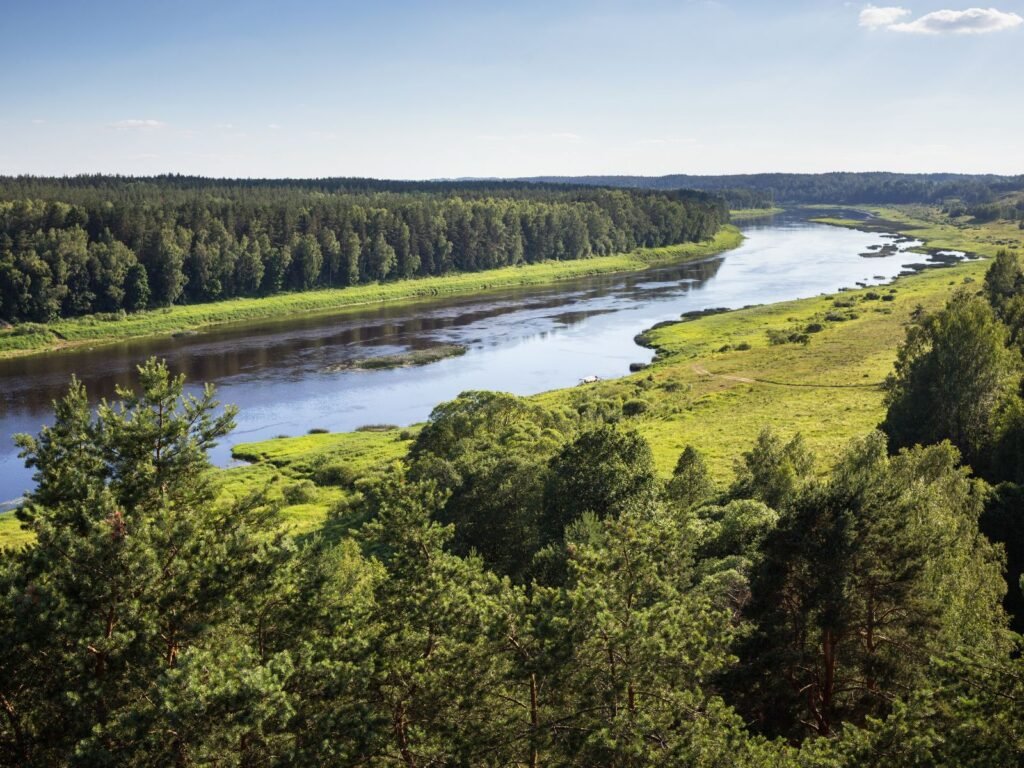
For me, the most beautiful section is Daugavas Loki Nature Park in southeastern Latvia. Here the river forms a series of spectacular meanders—among the largest in Northern Europe – flowing between wooded hills and sandstone outcrops in one of Latvia’s finest river landscapes.
If you’re planning a longer adventure, I highly recommend the 50 km paddle from Krāslava to Daugavpils. It makes an excellent two-day trip through one of Latvia’s least-visited regions, and you can easily combine it with exploring both historic towns. Further downstream, the sections around Jēkabpils and Koknese also offer enjoyable day trips.
One tip from experience: choose summer or another period of low water if possible. The lower water level reveals more of the river’s impressive banks and makes the scenery much more rewarding. Downstream, remember that the water level is influenced by the three hydroelectric power stations, while the upper Daugava remains largely free-flowing and much more natural.
Kayaking in Riga
And if you don’t want to leave the capital, Riga offers a completely different experience. Seeing the city skyline, parks and even parts of the port from a kayak is one of the best ways to discover a side of Riga that most visitors never experience.

Which Kayaking Destination in Latvia Should You Choose?
Choosing the best place to go kayaking in Latvia depends on the kind of adventure you’re after.
- Gauja – the classic choice for first-time visitors and spectacular sandstone scenery.
- Brasla – a narrow, peaceful river that feels wonderfully wild.
- Amata – Latvia’s best spring whitewater adventure.
- Irbe – forests, sand dunes and a finish on the Baltic Sea.
- Abava – the perfect mix of nature, culture and relaxed paddling.
- Salaca – iconic sandstone cliffs and gentle multi-day trips.
- Latgale Lakes – islands, campfires and true wilderness.
- Daugava – big landscapes, history and Latvia’s River of Destiny.
Whichever you choose, you’ll discover a side of Latvia that most visitors – and many locals – never see.
When Is the Best Time for Kayaking in Latvia?
The practical kayaking season usually runs from spring until October, but the character of the rivers changes significantly during that period.
There is no single best month for every route. High-water rivers, broad lowland rivers, forest lakes and the Baltic coast all respond differently to rain, wind and temperature.
Spring: High Water, Cold Conditions and the Amata
The first serious paddlers appear soon after the ice has melted.
Spring is the season for Latvia’s smaller and faster rivers. Snowmelt and rain raise water levels, covering rocks that make some routes nearly impassable later in the year. This is when the Amata and certain sections of the Brasla become most dynamic.
It is also when mistakes carry the greatest consequences.
Air temperatures can still be low in March, April and sometimes also early May, and the water is cold. Capsizes are not unusual on technical rivers, which means appropriate clothing, buoyancy equipment and genuine paddling experience matter considerably more than enthusiasm.
The reward is a short and unpredictable whitewater season. In a good spring, Latvia offers something surprisingly close to a mountain-river experience – without mountains, which is a respectable geographical achievement.
By May, most visitors no longer need whitewater skills to enjoy Latvia’s rivers. Instead, this is when destinations like the Gauja, Brasla, Abava and Salaca begin their best season for relaxed multi-day canoeing, kayaking and SUP trips.
Summer: The Main Season for Kayaking and Canoeing in Latvia
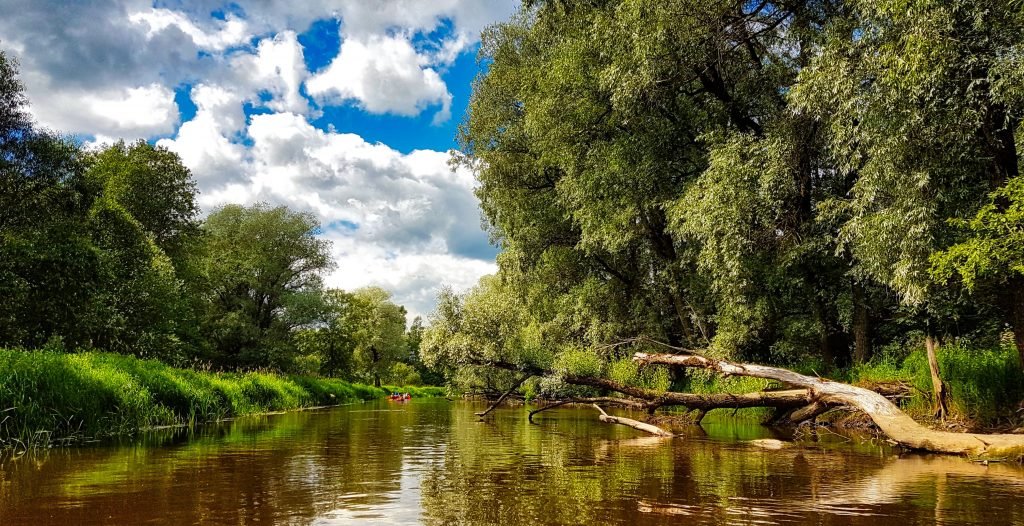
June, July and August are the easiest months for most kayaking trips in Latvia.
The weather is warmer, daylight is long and the larger rivers usually remain comfortably navigable. Summer is particularly suitable for:
- Gauja River journeys;
- relaxed family canoeing;
- multi-day routes with camping;
- kayaking on the lakes of Latgale;
- SUP trips;
- paddling routes ending at the Baltic coast.
Water levels on smaller rivers may become too low after long dry periods. This is especially relevant on the Brasla and Amata, where a route that looked inviting in April may offer mostly rocks, shallows and an intimate relationship with the riverbed by July.
Weekends in high summer are naturally busier, particularly on the Gauja. Even then, choosing a weekday or a less familiar section usually restores the Latvian standard of tranquillity.
Autumn: Quiet Rivers and Golden Forests
September and early October can be among the best times for kayaking in Latvia if the weather allows.
The largest summer crowds and horseflies have gone, and the forests begin changing colour. The Gauja, Salaca and Abava are particularly attractive during this period.
Autumn does require slightly more preparation. Days are shorter, evenings are colder and wet clothing becomes less amusing after sunset. A proper dry bag and warm spare layers are not accessories at this point; they are evidence of sound judgement.
Winter Kayaking in Latvia
Winter kayaking is possible during mild periods when rivers and floodplains remain free of ice.
The most unusual opportunity is the Dviete floodplain in south-eastern Latvia. During high water, meadows and floodplain forests can become temporarily navigable, creating routes through a landscape that is dry land during much of the year.
This is highly dependent on water level and weather. It is not a standard winter product that can be booked confidently months in advance. Nature has retained some control over the calendar.
For most visitors, May to September remains the most practical window for kayaking in Latvia.
Frequently Asked Questions About Kayaking in Latvia
What is the best river for kayaking in Latvia?
For most first-time visitors, the Gauja is the best all-round choice. It combines long navigable sections, Devonian sandstone cliffs, forest scenery, riverside campsites and several route options suitable for anything from a relaxed day trip to a multi-day journey.
It is also the easiest major river for organising kayak rental and transport. Those looking for something quieter may prefer the Brasla or Salaca, while the Irbe is hard to beat if the idea of finishing directly on a wild Baltic beach sounds appealing.
Which river is best for beginners?
The Gauja, Abava and Salaca all offer sections suitable for beginners. They generally have gentle currents, straightforward navigation and enough route options to choose a distance that matches the group’s experience.
The Līgatne–Sigulda section of the Gauja is particularly suitable for a first kayaking trip, while shorter sections of the Abava work well for families and relaxed day paddles.
Conditions still matter. Fallen trees, wind, unusually high water and cold weather can make even an easy river more demanding than expected.
Do I need previous kayaking experience?
Not for most kayaking routes in Latvia. Many of the country’s larger rivers are suitable for beginners after a short introduction to paddling, steering and basic safety.
Experience becomes much more important on narrow tributaries, during high water and on rivers with faster currents or obstacles. The Amata, in particular, is not a beginner river during the spring floods. At that time it can be fast, cold and technically demanding by Latvian standards.
What are the most important safety tips for kayaking in Latvia?
Latvian rivers are generally safe to paddle, but a few simple precautions make a big difference. Always wear a properly fitted life jacket, even on calm water. Most accidents happen close to shore or in places that look harmless.
One of the most common river hazards is fallen or partially submerged trees. Although they may seem easy to paddle around, the current can push a kayak or canoe against the branches and trap both the boat and paddler underneath. If a tree blocks most of the river, get out and carry your boat around the obstacle instead of trying to squeeze through.
Before setting off, check the weather forecast and recent water levels, especially on smaller rivers such as the Brasla or Amata, where conditions can change quickly after heavy rain. On larger lakes, strong winds can create surprisingly challenging waves, particularly for SUP paddlers.
Finally, let someone know your planned route, carry your phone in a waterproof bag and remember that cold water, rather than cold air, is often the greatest risk in spring and autumn.
What is the difference between kayaking and canoeing in Latvia?
Both kayaks and open Canadian-style canoes are commonly used on Latvian rivers, and most rental companies offer both. Kayaks are generally faster, easier to paddle into the wind and require less effort over longer distances. Open canoes, on the other hand, provide more room for camping equipment, children or an ambitious quantity of picnic supplies for families or multi-day trips.
The routes in this guide can generally be paddled in either type of boat, so the choice comes down to comfort, group size and the style of trip you prefer rather than the river itself.
Can I explore Latvia’s rivers on a stand-up paddleboard (SUP)?
Absolutely. Nearly all of the kayaking routes featured in this guide are equally enjoyable on a stand-up paddleboard. The same route recommendations, seasonal advice and safety considerations apply whether you paddle a kayak, canoe or SUP.
Paddling a SUP offers a different perspective. Standing higher above the water gives a higher viewpoint and a more immersive feeling of moving through the landscape. Many experienced paddlers explore classic Latvian rivers such as the Gauja, Salaca, Abava, Brasla and Irbe on SUP boards.
The main exception is large open lakes or very windy conditions, where a kayak is usually the more efficient and forgiving choice because it catches less wind.
When is the best time for kayaking in Latvia?
For most visitors, the best period is from May to September. Summer offers the warmest weather, long daylight hours and the widest choice of rivers and lakes.
May and early June are often excellent because water levels are usually better and the busiest summer period has not yet begun. September and early October can also be rewarding, especially on rivers such as the Gauja, Salaca and Abava when the forests change colour.
Spring is the main season for experienced paddlers seeking higher water on rivers such as the Amata. Winter kayaking is possible only under suitable ice and water conditions.
Can I rent a kayak or canoe in Latvia?
Yes. Rental companies operate on most of Latvia’s popular paddling rivers, including the Gauja, Abava, Salaca, Brasla, Irbe and Daugava.
Many providers also arrange boat delivery and transport back from the finishing point, which makes one-way journeys considerably easier. This is particularly useful on longer river routes where returning to the starting point would otherwise require complicated logistics.
Availability can be limited on summer weekends, so advance booking is sensible for popular routes and larger groups.
Can I go kayaking in Latvia without a guide?
Yes. Many established routes are straightforward enough for independent paddlers, especially on the Gauja, Abava and Salaca. Rental companies can usually advise on suitable distances, access points and transport.
A guide becomes more valuable when the route is less familiar, water levels are uncertain, the group has little experience or the trip combines paddling with nature interpretation and sightseeing.
Guided trips also remove the less romantic parts of river travel: boat transport, parking, route timing and discovering that the planned landing place is currently occupied by nettles.
Are multi-day kayaking trips possible in Latvia?
Latvia is particularly well suited to multi-day kayaking and canoeing. The Gauja, Salaca, Irbe, Abava and upper Daugava all offer longer routes that can be divided into two or more days.
The lakes of Latgale are another strong option for small expeditions, especially when several lakes are linked by channels or short river sections.
Designated campsites are available along some popular rivers, while conditions are more basic on remote routes. Always check local access, camping and protected-area regulations before setting off.
Is wild camping allowed along Latvian rivers?
Camping rules depend on land ownership and the protected status of the area. Some rivers have designated campsites, especially along popular routes such as the Gauja. These are usually the simplest and most responsible option.
Camping should not be assumed to be permitted on every attractive riverbank. Some areas are privately owned, while national parks, nature parks and protected habitats may have specific restrictions.
Use existing campsites, avoid damaging vegetation, take all waste with you and check current local rules before planning an overnight stop.
What should I bring for a kayaking trip in Latvia?
For a summer day trip, the essentials are a properly fitted buoyancy aid, drinking water, sun protection, a waterproof bag and clothing suitable for changing weather.
For longer journeys, add warm spare layers, food, basic first-aid supplies, a charged phone, route information and camping equipment. A dry bag is worth taking even when the forecast looks excellent. Latvian weather has a healthy scepticism toward forecasts.
In spring and autumn, cold water is a more serious risk than cold air. Clothing should be chosen for the water temperature and the possibility of capsizing, not only for how warm it feels on the riverbank.
Where Next?
Planning your own kayaking trip in Latvia?
Browse our Field Notes for more destination guides, outdoor adventures and practical travel tips gathered from years of exploring Latvia’s rivers, forests and coastline.
If planning logistics sounds less appealing than actually being on the water, I also organise guided kayaking trips through Baltic Nature Adventures across many of the rivers featured above. Whether you’re looking for a relaxed day on the Gauja or a multi-day wilderness expedition, I’ll be happy to help you choose the right route and take care of the logistics.
Have a favourite Latvian river – or another paddling destination that deserves a place on this list? I’d genuinely enjoy hearing your recommendations in the comments. Or send me a message at rolands@escaperies.com. I’m always happy to talk outdoor adventures, wildlife, nature and travel plans.
More beautiful than rivers can only be Latvian rivers! 🙂